-

Spirometry Filters for Special Populations: Pediatrics And Geriatrics
Views: 0 Author: Site Editor Publish Time: 2025-06-09 Origin: Site


Accurate spirometry—the measurement of lung volume, airflow, and breathing patterns—is essential in diagnosing and managing respiratory conditions such as asthma, COPD, and restrictive lung disease. A often overlooked but critical component in spirometry is the use of spirometry filters, placed between the patient and the device’s airflow sensor. These filters not only maintain hygiene and protect instrumentation but also help ensure measurement accuracy and patient comfort.
When dealing with special populations—especially young children and older adults—standard filters are often inadequate. These groups have unique anatomical, physiological, and psychological characteristics that can interfere with accurate testing unless the filters are specifically engineered to meet their needs.
One Filter Doesn't Fit All
1. The Case for Tailored Filters
Spirometry requires patients to inhale deeply, then exhale as forcefully and completely as possible into the device. Filters are used to prevent contamination, reduce sensor wear-and-tear, and preserve calibration. However, for certain groups:Dead Space Volume: Standard filters may contain significant internal volume—often 50–100 mL. For infants or small children, who have tidal volumes sometimes under 200 mL, or frail seniors with shallow breathing, this added volume dilutes lung measurements.
Flow Resistance: Even minimal pressure drops across a filter can alter flow–volume curves, especially for individuals with weak breathing effort
Comfort & Compliance: Pediatric patients might become distressed by unfamiliar equipment, while elderly patients may struggle with handling or maintaining the mouthpiece seal.
Infection Control Needs: Nursing homes and neonatal units require sterile, easy-to-handle disposable filters to lower infection risks.
These complications make it clear that “one filter doesn't fit all.”
Pediatric Considerations
2. Tiny Lung Volumes Demand Minimal Dead Space
Children, especially infants and toddlers, have limited lung capacity—frequently less than 500 mL. Standard filters compromise measurement by housing residual air that skews vital lung function parameters. Pediatric filters engineered to have ultra-low dead space—often as low as 0.2 to 2 mL—ensure accurate capture of exhaled volume. This small volume preserves measurement fidelity, enabling precise diagnosis and treatment management.3. Ultra-Low Resistance Is a Must
Young children may simply lack the strength to exhale forcefully. If the filter’s resistance is too high, pressure drops across the device can flatten airflow readings. Targets for pediatric filters include a pressure drop of less than 0.5 cm H₂O at 10 L/min flow—typically achieved through multi-layered pleated membranes and optimized airflow channels.4. Speed and Comfort Improve Cooperation
Testing children means they must remain still, focused, and ideally, interested. Visual cues and quick setup help. Pediatric filters often incorporate:Brightly colored housings and visual stickers
Snap-on connectors for easy, no-tools attachment
Lightweight construction to improve handling
Designs that allow rapid single-breath testing
These adjustments result in tests that finish quickly—often within one or two comfortable breaths—reducing anxiety and dropout rates.
Geriatric Needs
5. Age-Related Decline Demands Gentler Resistance
Older adults often experience reduced lung function even without respiratory disease. Diminished chest wall compliance, weaker diaphragm strength, and slower exhalation profiles are common. Standard respiratory filters burden such patients, who may be unable to generate sufficient pressure to complete the test fully, risking inaccurate or incomplete results.6. Infection Prevention in Shared Environments
Geriatric patients are often in clinics, nursing homes, or shared care units, where microbial threats are a constant. Filters in these settings must feature:Bacterial filtration efficiency (BFE) ≥ 99.9%
Individual packaging for single-patient use
Tamper-evident seals and single-use indicators
This approach helps minimize cross-contamination and supports infection control measures.
7. Ease of Use for Elderly Patients
Physical challenges such as arthritis, reduced hand strength, or cognitive decline can make standard filters harder to manipulate. Geriatric filters should include:Large, easy-grip bodies
Color-coded labels and orientation indicators
Simple, intuitive attachments compatible with major spirometer brands
These features reduce user error and encourage better cooperation.
Product Design Recommendations
To accommodate these age-related needs, filters for special populations should have the following features:
8. Universal Interface
A standard 22 mm ISO connector ensures compatibility with most spirometry devices. A firm click-and-lock system confirms a secure fit.9. Ultra-Low Dead Space
Limits of ≤ 2 mL internal dead space capture exhalations entirely, preventing volume loss and ensuring accurate measure integration even at low flows.10. Minimal Flow Resistance
High-permeability multi-layer membranes—often pleated PES or PP—can reduce pressure drop to < 0.5 cm H₂O at 10 L/min, ensuring patient comfort and testing fidelity.11. Antimicrobial & Hydrophobic Materials
Membranes treated with silver ions, PEG, or hydrophobic surface coatings help resist microbial growth. These also support HEPA-grade aerosol filtration, essential during outbreaks of airborne pathogens.12. Participant-Friendly Physical Design
Child-Focused Features: Lightweight (≤ 20 g), colorful bodies, intuitive snap-fit connectors.
Senior-Focused Features: Easy-to-grip surfaces (textured or rubberized), enlarged connectors, tactile orientation cues.
13. Hygienic Single-Use Packaging
Each filter should come gamma-irradiated, sealed in a sterile pouch with clear labeling (lot number, expiry, sterilization date).How ZhenFu Group Meets These Needs
ZhenFu Group, an industry leader in respiratory health solutions, offers a specialized product line for pediatric and geriatric spirometry needs:
Dead Space Volume < 0.8 mL — enabling accuracy in lung volume readings for small lungs
Resistance Under 0.4 cm H₂O at 12 L/min — ensuring breath stability for elder populations
Silver-Ion Antimicrobial Treatment — achieving a > 99.99% kill rate within 24 hours
Visual Indicators and Universal Click Adapter — clear directional cues for techs and caregivers
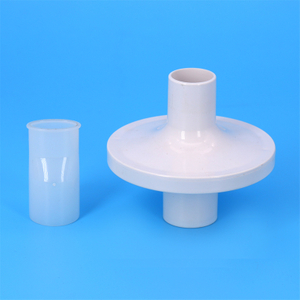
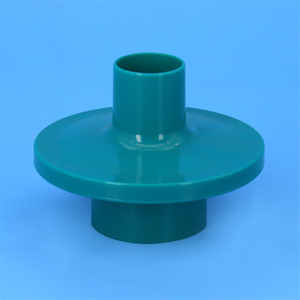
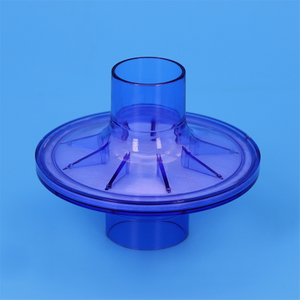
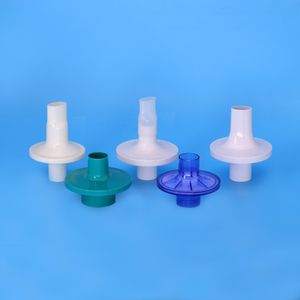
Bright Color Coding (green = pediatric, purple = geriatric) for easy sorting and user differentiation
Compliant Packaging: Individually gamma-sterilized, ISO 13485 / CE marked
A cross-sectional study across multiple clinics revealed that:
95% of toddlers completed reliable spirometry in a single try
Zero false peaks recorded in tests with elderly participants
No cross-contamination incidents attributed to filter handling
Training time cut by 30%, thanks to intuitive packaging and connectors
Best Practices for Use
To maximize these benefits:
Select Appropriately
Choose pediatric filters for patients under 7 years or with tidal volumes < 300 mL. Use geriatric filters for patients over 65 or with measured FEV1 < 1 L.Use Single-Patient Per Test
Replace filters between patients to prevent cross-contamination and ensure hygienic testing.Follow Proper Priming
Briefly inhale/exhale through the filter to clear air bubbles before starting. Avoid touching the filter’s inner surfaces.Use Training Aids
For children, pair with video or visual guides; for seniors, coach breathing patterns clearly and avoid breath-hold cycles.Record Filter Use
Note batch numbers or expiry dates in the testing record for traceability and post-usage audits.
Conclusion
Spirometry filters play a vital yet frequently under-realized role in respiratory testing—especially for children and elderly individuals. Designing products that address dead space, airflow resistance, contamination control, comfort, and ease of use can dramatically enhance accuracy, patient experience, and safety.
ZhenFu Group's specialized filter line demonstrates how thoughtful engineering meets diverse needs: low-volume, low-resistance filters that safeguard against microbes, fit seamlessly, and support efficient workflows. By tailoring filters to each patient's age and abilities, clinicians ensure that every breath is accurately measured, every test is comfortable, and every result is reliable.
Yes—one filter doesn't fit all. But the right filter, precisely designed for your patient's needs, can make all the difference. Dive deeper into ZhenFu's pediatric and geriatric filters to elevate your respiratory care standard.